

Unique Employee Benefits for Any Budget
With competition for top talent increasing, you need to offer employee benefits that stand out without draining your budget. Fortunately, unique perks can enhance your team’s well-being, motivation, and loyalty while fitting a variety of financial plans. By exploring creative options beyond traditional packages, you can tailor benefits that align with your employees’ diverse needs and values. This guide will help you discover impactful ways to invest in your workforce and build a thriving workplace culture, no matter the size of your budget.

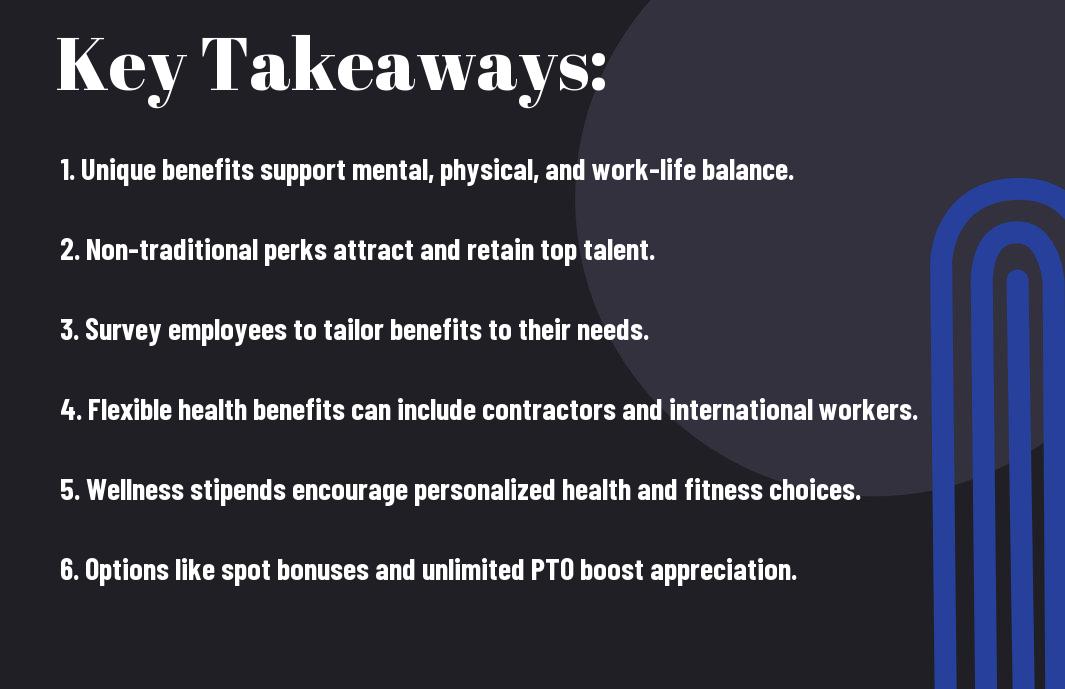
Key Takeaways:
- Unique employee benefits extend beyond traditional perks like health insurance and paid time off by supporting mental health, work-life balance, and personal development.
- Offering benefits to contractors, such as health savings accounts or lifestyle spending accounts, addresses the growing independent workforce.
- Mental health resources, including telehealth consultations, are in high demand but not universally accessible, making them valuable additions.
- Flexible wellness stipends empower employees to choose how they support their health, increasing engagement with wellness programs.
- Spot bonuses and recognition programs help employees feel valued and appreciated, contributing to better retention.
- Innovative benefits like unlimited PTO, four-day workweeks, asynchronous work, and flexible workspaces cater to diverse employee needs and promote productivity.
- Supporting employees’ family responsibilities with stipends and other non-traditional benefits strengthens overall employee satisfaction and loyalty.
Transforming Traditional Benefits into Modern Essentials
The Shifting Landscape of Employee Expectations
Over the past decade, employee expectations around benefits have shifted dramatically. What once sufficed as standard—basic health insurance, a retirement plan, and PTO—now often feels insufficient in attracting and retaining top talent. Younger workers, particularly Millennials and Gen Z, weight mental health support, flexibility, and personalized benefits just as heavily as salary. For instance, a 2023 survey by Glassdoor found that 60% of employees would choose a job with flexible work hours and enhanced mental wellness programs over one with a higher paycheck but fewer perks. This changing landscape means your benefits strategy should reflect the nuanced needs of a multigenerational workforce.
Companies that adapt quickly gain a significant edge. Consider how offering asynchronous work schedules or health and wellness stipends can appeal not only to remote workers but also to employees balancing childcare or caregiving duties. These preferences are no longer fringe requests; they have become expected provisions. As you rebuild or refine benefit packages, you’ll have to think beyond traditional checklists and instead focus on dynamic, customizable options that resonate with your current and future workforce.
Bridging the Gap: Addressing Employee Needs
Finding the right balance between traditional and unique benefits involves listening to your employees and understanding their evolving priorities. One effective method is conducting regular, confidential employee surveys that identify which benefits your team values most, whether it’s expanded mental health support, family stipends, or flexible workspace options. Data from such surveys often reveal unexpected insights—for example, a significant percentage of employees in one mid-sized company prioritized home office reimbursements over gym memberships, signaling a tangible need rather than a perceived luxury.
Providing scalable options can also bridge gaps between employee demographics and working styles. Offering contractors access to health savings accounts or lifestyle spending accounts shows responsiveness to the growing contingent workforce. Similarly, spot bonus programs and unlimited PTO demonstrate flexibility and recognition that traditional benefits lack. By targeting benefits to specific employee segments while maintaining core offerings, you create a benefits ecosystem that feels inclusive and effective.
Addressing employee needs means not only offering benefits but also enabling easy access and clear communication around them. Platforms that consolidate these perks into user-friendly portals reduce friction and encourage higher utilization rates. When employees can effortlessly tap into mental health resources, submit home office expense reimbursements, or nominate colleagues for spot bonuses, the perceived value of your benefits package increases significantly. Transparency in eligibility and regular updates further foster trust and engagement, turning benefits from static perks into active tools for workforce well-being and productivity.
Innovative Benefits that Boost Engagement and Well-being
Integrating benefits that actively support employee engagement and well-being transforms your workplace culture in meaningful ways. These perks go beyond traditional offerings by addressing mental health, personal lifestyle choices, and unique needs that foster loyalty and productivity. When you prioritize such benefits, you connect with employees on a deeper level, showing genuine investment in their holistic happiness and success.
Companies that lead with innovative benefits often report reduced turnover rates and higher overall satisfaction. By aligning your offerings with emerging trends and your team’s evolving preferences, you create an environment where employees feel valued and motivated to contribute their best work.
Mental Health Resources: A Growing Necessity
With 59% of employees experiencing moderate or higher burnout, mental health support has moved front and center in employee benefits programs. Offering comprehensive mental health resources can include access to therapy sessions, digital mental health apps, or telehealth consultations, which accommodate both in-person and remote workers. Only 61% of employees currently report access to such services, so expanding these benefits clearly sets you apart.
Partnering with vendors who specialize in mental health ensures that your employees receive quality care tailored to their needs. Additionally, embedding programs for stress management, resilience training, and confidential counseling sends a strong signal that mental wellness is an ongoing priority — not just a checkbox on a benefits list.
Wellness Stipends: Empowering Personal Choices
Wellness stipends empower your employees to take control of their health by allowing them to spend on the wellness options that suit them best. Unlike traditional gym memberships or standardized wellness programs, stipends accommodate diverse preferences—from yoga classes at home to meditation apps or ergonomic equipment. This flexibility significantly increases participation and satisfaction.
Webflow’s $200 monthly wellness stipend distributed through Compt exemplifies how this approach works in practice. Employees report using funds for everything from fitness trackers to healthy meal delivery, which supports physical health tailored to individual routines. These stipends remove the guesswork from wellness initiatives while showing trust in employees’ judgment about what best enhances their well-being.
Offering wellness stipends also simplifies administration, as you provide a clear budget without needing to manage multiple programs. This model adapts well to remote and hybrid teams, ensuring all employees, regardless of location or lifestyle, can access meaningful wellness support that fits their schedule and passions.
Creative Compensation Strategies that Stand Out
Moving beyond standard salary increases and annual bonuses, you can implement compensation tactics that make your employees feel genuinely valued while keeping engagement high. Creative strategies like spot bonuses and pet insurance aren’t just perks—they’re signals that you notice individual contributions and care about employees’ lives both inside and outside of work. These strategies often cost less than you might expect but deliver disproportionately positive impacts on morale and retention.
Tailoring compensation to reflect your company culture and workforce demographics also helps you stay competitive in a tight labor market. For instance, integrating health and wellness stipends with spot bonuses creates an ecosystem where recognition and well-being go hand in hand. By thoughtfully mixing monetary rewards and non-monetary benefits, you encourage a motivated workforce without significantly inflating your budget.
The Power of Spot Bonuses for Recognition
Spot bonuses excel as immediate rewards that recognize employees for exceptional efforts or contributions that might otherwise go unnoticed between regular performance reviews. Their unpredictable nature adds an element of surprise, making employees feel uniquely appreciated. Companies that deployed spot bonus programs saw increased employee satisfaction and reduced turnover, with bonuses ranging from as little as $50 to several thousand dollars depending on the achievement.
By enabling peer nominations for spot bonuses, you foster a culture of appreciation that extends beyond managers to the entire team. For example, holding monthly town hall drawings for “MVP” awards with spot bonuses attached not only highlights outstanding work but also builds camaraderie and boosts overall morale. This simple yet effective practice lets you reward behaviors aligned with company values in real-time, reinforcing positive performance continuously.
Pet Insurance: Caring for the Whole Family
Offering pet insurance as part of your benefits package shows empathy toward employees’ personal lives and helps reduce financial stress related to unexpected veterinary bills. With about two-thirds of US households owning pets and average emergency vet visits costing anywhere from $160 to $1,290, having this safety net is increasingly desirable. The employer’s investment involves just a modest monthly fee per pet owner, but the impact on employees’ peace of mind can be substantial.
Companies like Vertafore provide pet insurance that covers up to 90% of costs for exams, vaccinations, accidents, illnesses, and hereditary conditions. Adding this benefit speaks volumes about your company’s commitment to comprehensive care, making it easier to attract and retain pet owners who consider their animals part of their family. Even smaller businesses can offer group plans or stipends to help cover pet insurance premiums, tailoring the approach to fit their workforce.
Beyond covering vet bills, pet insurance reduces the likelihood that employees will need to take unexpected time off due to their pet’s health emergencies. Offering this benefit contributes to an improved work-life balance and lowers stress, translating into better focus and productivity on the job. It’s a thoughtful perk that resonates deeply with many employees and sets your company apart as a truly people-centric employer.

Flexible Work Arrangements that Enhance Productivity
Flexible work arrangements have become a defining factor in employee satisfaction and overall productivity. By allowing your team members to tailor their schedules or work locations, you empower them to manage their energy and focus more effectively. Options such as asynchronous work, flexible start and end times, or even hybrid models create an environment where employees can navigate their professional and personal lives with greater ease, reducing burnout and boosting engagement.
The impact of flexibility isn’t just anecdotal. Research from Stanford revealed that employees with flexible schedules experienced a 13% increase in productivity, along with reporting higher job satisfaction and lower turnover rates. Your organization can leverage this momentum by exploring a spectrum of arrangements — from compressed workweeks to coworking space memberships — each designed to meet your team’s unique needs while maintaining performance standards.
Embracing Unlimited PTO for Work-Life Balance
Unlimited paid time off creates a culture of trust and autonomy, granting your employees the freedom to recharge without the stress of counting days. When your team isn’t pressured to ration vacation time, they’re more likely to take breaks that genuinely benefit their mental health and personal lives. This approach has empowered companies like Netflix to foster a results-oriented environment where employees focus on deliverables rather than clocking hours.
Implementing unlimited PTO also helps attract talent that prioritizes work-life balance. According to a 2022 Fortune poll, over half of workers expressed willingness to accept lower pay for jobs offering unlimited vacation. While it requires clear communication about expectations and responsibilities, the payoff is a workforce that feels valued and stands ready to give their best effort when on the clock.
Exploring the Four-Day Workweek
The four-day workweek compresses the traditional work schedule without sacrificing pay or vacation benefits, giving employees an extra day to focus on personal priorities. Trials across various companies have shown that adopting this model can lead to enhanced productivity, reduced absenteeism, and improved employee well-being. By aligning work hours to better suit your team’s rhythm, you position your company to compete more effectively for talent who value flexibility with tangible time off.
This model also carries strategic advantages in recruitment and retention. When employees gain a guaranteed three-day weekend, you create a compelling incentive that often outweighs conventional perks. The added day offers room not only for relaxation but also for professional development or family commitments, making your workforce more balanced and resilient.
Adjustments like extending daily hours to maintain a 40-hour workweek or reducing total hours to 32 while keeping standard days demonstrate the versatility of the four-day workweek. Whether you prioritize sustained focus with longer days or shorter overall hours for enhanced well-being, tailoring the structure to your company’s and employees’ needs can yield significant gains in morale and output.

Supporting Diverse Employee Needs Beyond the Workplace
Expanding your benefits package to address responsibilities outside of work helps build a more inclusive and supportive culture. Employees juggling caregiving duties, education, or health challenges often look for employers who acknowledge these broader life demands. Offering targeted stipends or reimbursements can provide meaningful relief and demonstrate that your company values the whole person, not just their productivity during office hours.
Flexible support programs also reduce stress and improve loyalty by removing barriers that might otherwise lead to burnout or turnover. Whether it’s related to family commitments, commuting challenges, or home office setups, tailoring benefits to accommodate personal circumstances gives your people the freedom to thrive both on and off the clock.
Family Stipends: Acknowledging Broader Responsibilities
Paid parental leave is a powerful start, but many employees need support that extends well beyond the birth or adoption of a child. Family stipends provide financial assistance for ongoing caregiving expenses like childcare, eldercare, tutoring, or even special needs resources. These programs recognize the continuous nature of family responsibilities and the diverse forms they can take across different households.
Bank of America’s pandemic response, which included reimbursements for family-related expenses, highlights how these stipends can adapt to unexpected challenges. By offering funds that cover items such as childcare services, homeschooling supplies, or eldercare support, you reduce out-of-pocket stress for employees managing heavy personal demands, allowing them to focus better at work and feel seen for their whole lives.
Home Office and Commuter Supports for a Modern Workforce
The line between home and work has blurred, and your benefits should reflect that shift. Home office reimbursements help employees equip themselves effectively, covering necessary investments like ergonomic chairs, monitors, or faster internet. This not only improves comfort and productivity but also signals that you’re invested in their success regardless of location. Webflow’s $200 monthly health and wellness stipend is a great example of empowering employees to personalize their work environments according to what suits them best.
Even with widespread remote work, commuting remains a reality for some. Commuter benefits that reimburse public transit, parking fees, or ride-sharing costs alleviate financial pressures associated with daily travel. Setting up reimbursement programs through platforms like Compt streamlines the process and ensures employees feel supported whether they’re logging in from home or heading to the office.
Providing tailored allowances or stipends for home office vitals and commuting expenses transforms these logistical challenges from burdens into manageable parts of your employees’ routines. This practical assistance not only enhances job satisfaction but can also be a competitive advantage in attracting talent who seek flexible and adaptive work arrangements.
To wrap up
Considering all points, offering unique employee benefits allows you to stand out as an employer who values and supports your team beyond standard compensation. By thoughtfully selecting perks that align with your employees’ diverse needs and interests, you can enhance job satisfaction, boost morale, and retain top talent. Whether you have a large budget or are working within tight financial constraints, there are creative and impactful options available that make a significant difference.
Your investment in these tailored benefits sends a clear message that you prioritize your employees’ well-being, work-life balance, and professional growth. This approach not only strengthens your company culture but also positions you competitively in today’s evolving workforce landscape. Embracing unique benefits can transform your workplace into an environment where people feel truly valued and motivated to contribute their best.
FAQ
Q: What are unique employee benefits and how do they differ from traditional benefits?
A: Unique employee benefits are perks offered beyond the standard salary and traditional benefits like health insurance or paid time off. These benefits focus on supporting employees’ mental and physical health, work-life balance, and personal or professional growth, often tailored to meet diverse needs and interests within the workforce.
Q: Why should companies consider offering unique employee benefits?
A: Offering unique benefits helps businesses attract and retain top talent by addressing needs that traditional benefits might not cover. These perks can improve employee satisfaction, boost morale, and enhance productivity, while also creating a more inclusive and supportive workplace environment.
Q: Can small businesses afford to provide unique employee benefits?
A: Yes, many unique benefits can be adapted to fit any budget. Examples include spot bonuses, mental health resources, home office reimbursements, or flexible work schedules. Small businesses can prioritize benefits that align best with their team’s needs through employee surveys and gradually expand offerings over time.
Q: How can companies determine which unique benefits their employees will value most?
A: Running confidential employee benefits surveys is an effective way to gather feedback on what perks are most desired. This ensures that investment in benefits aligns with the interests and priorities of the workforce, leading to higher participation and satisfaction rates.
Q: Are there unique benefits that support remote or contract workers?
A: Absolutely. Employers can offer health savings accounts, lifestyle spending accounts, or home office reimbursements to contractors and remote employees. Flexible workspaces and asynchronous work policies also support these groups by providing flexibility and accommodating different work styles.
Q: How do spot bonuses differ from traditional bonuses, and what is their impact?
A: Spot bonuses are spontaneous, one-time rewards given for exceptional or above-and-beyond work that may not be tied to preset goals. Unlike regular bonuses, they surprise employees and reinforce appreciation immediately, fostering motivation and a positive company culture.
Q: What are some examples of unique benefits that promote employee well-being?
A: Examples include mental health support programs like telehealth consultations, health and wellness stipends, pet insurance, unlimited paid time off, four-day workweeks, and family stipends. These benefits help employees maintain a healthy work-life balance and address needs beyond the workplace.
Leave a Comment