

25 Types of Employee Benefits To Look For in a New Job
The Importance of Employee Benefits in Job Selection
You may find that the scope and quality of employee benefits often weigh heavily in your decision to accept a job offer. For instance, companies offering comprehensive medical coverage, including mental health support and specialist services, typically attract talent looking for security beyond just salary. According to a 2024 survey by SHRM, 92% of job seekers consider health benefits a top priority, showing how integral these perks are to overall job satisfaction and long-term commitment.
Beyond healthcare, benefits like retirement planning options or student loan repayment assistance can significantly impact your financial wellbeing and future planning. Imagine joining an employer that not only matches your 401(k) contributions but also offers college grants or continuing education allowances. These benefits create a tangible advantage that can multiply your compensation’s value over time, making certain positions far more attractive when you look at the bigger picture of your career trajectory and personal growth.

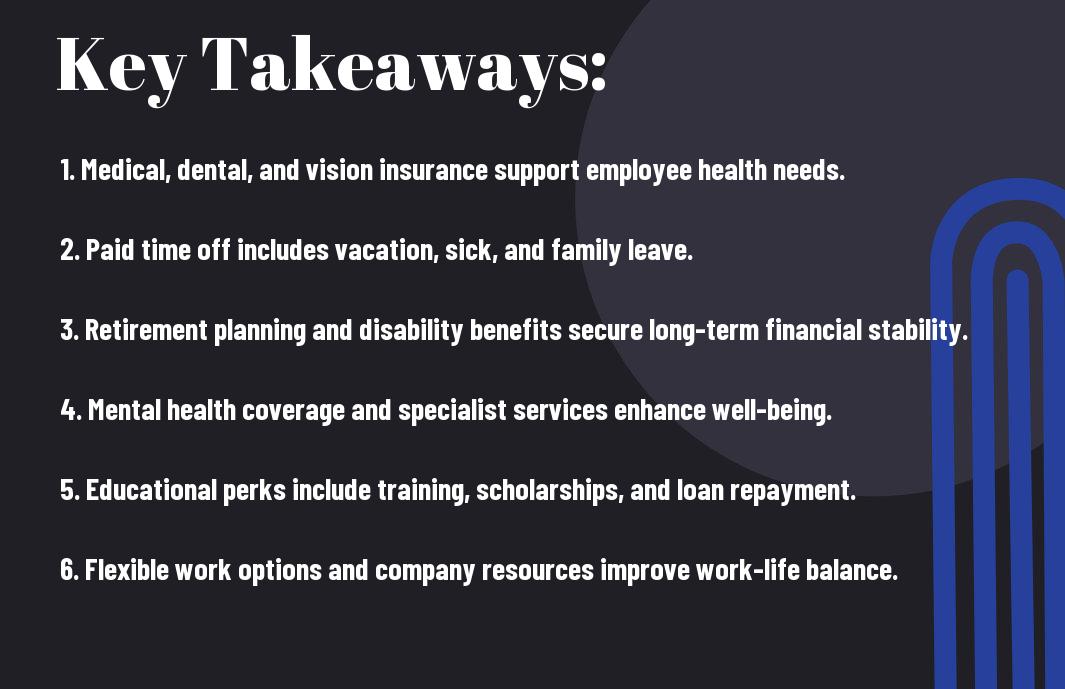
Key Takeaways:
- Employee benefits cover a wide range of areas including health, financial security, and work-life balance.
- Common health-related benefits include medical, dental, vision, mental health coverage, and prescription benefits.
- Time-off benefits such as paid vacation, sick leave, extended leave, and family leave support employees’ personal needs.
- Financial and career development perks include retirement planning, student loan repayment, continuing education allowances, and paid training.
- Additional perks like remote work flexibility, company equipment, transportation, and investment opportunities enhance overall job satisfaction.
Essential Medical-Related Benefits
Medical-related benefits form the foundation of any robust employee compensation package. These offerings not only support your immediate health needs but also provide long-term security and peace of mind. In an era where healthcare costs continue to rise, having access to comprehensive coverage helps shield you from unexpected medical expenses and allows you to prioritize your well-being without financial strain. Employers increasingly understand that investing in thorough medical benefits drives employee satisfaction and retention, recognizing the direct impact on productivity and morale.
Beyond the basic health insurance plan, you might find benefits that include prescription coverage, specialist services, and mental health resources. These components ensure that you receive more than just emergency care—they enable ongoing wellness management. Companies offering these advantages often provide access to employee assistance programs (EAPs) or telehealth services, further enhancing your ability to address health concerns conveniently and discreetly.
Comprehensive Medical Coverage
Your medical coverage should extend beyond a simple insurance plan to encompass a variety of health services. Look for benefits that include hospitalization coverage, outpatient treatment, preventive care, and chronic disease management. For example, some plans boast no-copay doctor visits or cover annual physicals fully, which promotes early detection and health maintenance. When assessing coverage, consider the provider network and the inclusion of high-quality hospitals and specialists to ensure you have access to the care you need wherever you are.
Employers often negotiate group rates that lower your premiums significantly compared to individual plans—sometimes by 30% or more. Additionally, modern plans may include wellness incentives like discounts on gym memberships or access to nutritional counseling, encouraging a healthier lifestyle. These options not only reduce your out-of-pocket expenses but also offer a holistic approach to health, integrating preventive and emergency care.
Dental and Vision Insurance
Dental and vision insurance frequently appear as separate benefits from basic medical plans, yet they play a vital role in maintaining your overall health. Regular dental check-ups and cleanings can prevent serious issues like gum disease, which research links to heart problems and diabetes. Vision insurance typically covers routine eye exams, prescription glasses, and contact lenses, making it easier to manage these necessities without substantial costs.
Your dental insurance might cover a percentage of procedures such as fillings, extractions, and root canals, often with annual maximums around $1,500. Vision benefits typically include allowances for frames and lenses, with some plans offering discounts on elective procedures like LASIK. Employers offering these benefits demonstrate a commitment to your comprehensive health, reducing the likelihood of untreated issues that could lead to more severe complications.
More information on dental and vision insurance shows that comprehensive plans can improve your quality of life significantly. For instance, dental plans might provide coverage for orthodontics or periodontal treatments, while vision plans sometimes extend to coverage for safety glasses or specialty lenses needed for work environments. Having these benefits in your package means you can access necessary care promptly, reducing missed workdays and enhancing your daily comfort and health.

Financial Security and Planning Perks
Your financial future gains a stronger foundation with access to comprehensive benefits beyond just your paycheck. Many employers now offer robust options designed to help you build wealth, reduce debt, and plan efficiently for retirement while you’re actively working. These benefits often include flexible savings programs, employer matching contributions, and targeted financial wellness resources that can make a noticeable difference in your ability to manage money and invest wisely. For instance, companies that provide student loan repayment assistance or college grants relieve immediate financial pressure, allowing you to focus on long-term goals without being overwhelmed by current debts.
Moreover, perks focused on financial planning can enhance your understanding of investment strategies and retirement readiness. You might receive access to personalized consultations, online tools, and seminars tailored to your career stage. These resources empower you to make informed decisions about allocating your income toward savings vehicles or insurance products, potentially decreasing your tax liabilities and increasing future benefits. Your employer’s support in this arena can turn complex financial topics into manageable steps, ensuring greater peace of mind as you navigate your career and beyond.
Retirement Options and Investment Opportunities
Retirement benefits often start with a 401(k) or similar defined contribution plan, which many employers enhance through matching contributions that effectively boost your savings without additional effort on your part. Some companies go further by offering Roth 401(k) options or automatic escalation features that gradually increase your contribution percentage over time—helping you save more as your salary grows. Access to low-fee investment funds within these plans means your retirement nest egg has the potential to grow more efficiently, maximizing the impact of both your and your employer’s contributions.
Investment opportunities don’t stop at retirement accounts. Your employer might provide stock purchase plans, profit-sharing arrangements, or access to exclusive investment funds unavailable to the public. These perks give you a chance to diversify your portfolio and gain equity in the company, potentially benefiting from the company’s growth. Combined with educational resources and financial advisory support, these offerings allow you to craft a personalized investment strategy aligned with your risk tolerance and long-term goals, all within a secure employment framework.
Life and Disability Insurance
Life insurance provided by your employer often serves as the baseline financial safety net for your loved ones, with many companies offering a standard level of coverage at no cost to you. You can typically purchase additional coverage through payroll deductions, tailoring your policy to fit your personal needs. Disability insurance, another key component, protects your income by replacing a portion of your wages if illness or injury prevents you from working, ensuring financial stability during unexpected setbacks.
Group life and disability insurance through your employer usually come with more favorable rates compared to individual policies, making it an accessible form of protection. Short-term disability benefits can cover you for a few weeks or months, while long-term policies provide ongoing support that lasts until you return to work or reach retirement age. These benefits safeguard not only your financial wellbeing but also your family’s standard of living in times of crisis, giving you confidence that you won’t face the burden alone.
Additional riders or supplemental insurance options may be available to enhance your coverage, such as accidental death and dismemberment policies or critical illness plans. Exploring these can provide even broader financial security tailored to your specific priorities and circumstances.

Work-Life Balance Enhancements
Paid Time Off and Family Leave
Offering generous paid time off (PTO) policies can shape your overall job satisfaction significantly. Many companies now combine traditional vacation time, paid sick leave, and personal days into a unified PTO bank, allowing you greater flexibility to manage your time off as needed. For example, organizations with unlimited PTO policies report a 13% higher employee retention rate, making it easier for you to balance work demands and personal priorities without strict limits.
Family leave benefits extend beyond the federally mandated standards in some workplaces, providing paid maternity, paternity, and adoption leave options. With surveys indicating that 60% of employees consider parental leave a top benefit, having access to extended family leave support helps you navigate major life events without financial strain. Plans offering 12 weeks or more of paid family leave enable new parents to focus on bonding and recovery, which directly correlates with higher engagement when you return to work.
Flexible Work Arrangements
Flexibility in when and where you work has become a defining perk in today’s job market. Employers increasingly provide options such as compressed workweeks, flextime, or fully remote roles to accommodate different lifestyles. Data from recent studies show that 73% of employees report better mental health due to having some control over their schedules. This flexibility not only helps you avoid peak-hour commutes but also allows for personalized productivity rhythms, so you can handle peak work tasks during your most focused hours.
Several leading firms offer hybrid models, combining office presence with remote work. This approach supports collaboration without sacrificing autonomy, letting you spend critical days onsite for team meetings and others working from the comfort of home. Companies tailoring flexible work arrangement packages often report a 20% increase in job satisfaction, signaling how accommodating your needs benefits both sides.
Digging deeper into flexible work arrangements, some employers integrate technology tools that facilitate seamless remote communication, such as video conferencing and cloud-based project management platforms. These investments demonstrate how supporting flexible schedules goes hand-in-hand with enabling effective teamwork, allowing you to stay connected and productive regardless of location.
Educational and Professional Development Incentives
Employers that invest in your growth can significantly impact your career trajectory and job satisfaction. Beyond basic training, many companies offer structured programs that help you build new skills, earn certifications, or pursue advanced degrees relevant to your field. This often includes access to workshops, seminars, or industry conferences that expand your knowledge base and professional network, positioning you for advancement within the organization or your industry.
These benefits not only enhance your expertise but can also improve your earning potential and job security over time. Plus, gaining new skills through employer-sponsored opportunities allows you to stay competitive, adapt to changing job requirements, and increase your value as a professional.
Continuing Education and Training Opportunities
Continuing education benefits typically cover tuition reimbursement, online course fees, or certification programs that align with your role or career goals. Some companies allocate an annual budget specifically for this purpose, enabling you to take courses in areas like project management, software development, or leadership without out-of-pocket expenses. In 2024, nearly 60% of top employers reported offering such allowances, underlining their recognition of lifelong learning as a key driver of workforce excellence.
Additionally, paid training sessions and in-house development programs equip you with up-to-date knowledge and technical skills pertinent to your industry. For instance, tech firms often provide access to coding bootcamps or specialized workshops on new platforms, fostering rapid skill acquisition. These initiatives not only help you stay current but also demonstrate your employer’s commitment to your professional growth.
Student Loan Repayment and Scholarship Programs
Addressing student debt through employer benefits has become increasingly common, with around 25% of U.S. companies now offering student loan repayment assistance programs. Such benefits may involve monthly contributions toward your federal or private student loans, reducing financial stress and accelerating your path to debt freedom. Some employers also offer scholarships or grants for employees seeking further education, making continued learning more affordable.
Student loan repayment programs vary widely. Some companies provide matching contributions up to a specified annual limit, while others offer lump-sum payments as incentives for tenure or achieving performance milestones. Companies like PwC and Aetna have introduced programs that pay up to $1,200 annually toward employee loans—highlighting how this benefit can serve as a compelling recruitment and retention tool.
Beyond debt reduction, scholarship programs often extend to employees’ dependents, offering tuition assistance or grants to support college education. This type of benefit reinforces a family-friendly culture and long-term employee engagement, helping you balance work and educational aspirations more effectively.
Unique Perks That Set Companies Apart
Some of the most attractive employee benefits go beyond traditional healthcare and retirement plans, offering experiences and support that truly distinguish a company’s culture. Innovative perks often address the evolving needs of today’s workforce, focusing on overall well-being, personal growth, and work flexibility. These standout benefits not only increase job satisfaction but can also play a pivotal role in employee retention and engagement.
From wellness-centered initiatives to tailored remote work support, companies that prioritize these unique perks demonstrate a commitment to their employees’ holistic success. These offerings may include specialized programs that address both physical and mental health, alongside flexible resources that help you create a productive home workspace, balancing professional demands with personal comfort.
Wellness Programs and Mental Health Support
Increasingly, employers recognize that mental health impacts productivity and job satisfaction just as much as physical health. Wellness programs that include access to on-site fitness classes, meditation sessions, or virtual therapy platforms can provide valuable outlets for stress reduction and emotional support. Some companies even partner with specialized mental health providers to offer confidential counseling services or mental health days, helping you prioritize psychological well-being without stigma.
Many benefits now extend to holistic wellness, merging traditional health insurance with perks like nutrition coaching, mindfulness workshops, and resilience training. By investing in these areas, companies not only support your immediate well-being but also foster a healthier, more engaged workforce over time. For instance, a 2024 survey found that 68% of employees reported improved job performance after engaging with employer-sponsored mental health resources.
Remote Work Equipment and Living Stipends
As remote work becomes a standard option, companies providing comprehensive support for your home office setup significantly ease your transition and day-to-day comfort. Benefits might include stipends for purchasing ergonomic chairs, high-quality monitors, or noise-canceling headphones, ensuring you have the right tools to maintain productivity and reduce physical strain. In some cases, these stipends cover internet upgrades and other crucial tech to create a seamless work experience.
Beyond equipment, living stipends offer additional financial flexibility while working remotely. These funds can help offset expenses such as utility bills, coworking memberships, or even enhanced home office adaptions, which might otherwise go unpaid. Organizations with robust living stipend programs report higher employee satisfaction in remote roles and greater retention rates, illustrating the value of supporting your work environment financially as well as practically.
Some employers also offer monthly or quarterly allowances specifically designed to personalize your remote work experience. These can be used not only for hardware upgrades but also for wellness accessories, ergonomic improvements, or even educational resources to enhance your skills—all contributing to a more comfortable and sustainable remote work lifestyle.
Final Thoughts: Evaluating Job Offers Beyond Salary
Salary often grabs the spotlight when considering job offers, but the total value of benefits can sometimes add thousands of dollars to your overall compensation package. For example, comprehensive health coverage including medical, dental, and vision insurance can save you upwards of $10,000 annually in out-of-pocket expenses. Additionally, perks like paid training and continuing education allowances not only reduce your personal costs for skill development but also position you for future career growth without dipping into your own budget.
You might also find that flexible benefits such as remote work options and paid family leave greatly enhance your quality of life, even if they don’t show up as direct dollar amounts. Disability benefits and workers’ compensation offer security that can help you avoid financial hardship during unforeseen events. So, when comparing offers, tally up these advantages alongside salary figures. Sometimes, a slightly lower salary paired with robust benefits can provide better long-term financial and personal wellbeing.
FAQ
Q: What types of health insurance benefits are commonly offered in employee benefit packages?
A: Common health insurance benefits include medical coverage, dental insurance, vision insurance, prescription and pharmacy benefits, specialist services, and mental health coverage. These benefits help employees manage healthcare costs and access necessary medical services.
Q: How do retirement planning benefits support employees?
A: Retirement planning benefits typically involve options like 401(k) plans or pension schemes that help employees save and invest for their future. Employers may also offer financial advice or matching contributions, encouraging long-term financial security.
Q: What types of paid leave can employees expect from comprehensive benefits?
A: Paid leave benefits often include paid time off (PTO), paid vacation time, paid sick leave, extended leave, and family leave. These allow employees to take time away from work for rest, illness, or personal and family needs without losing income.
Q: What perks assist employees in career growth and development?
A: Perks supporting career growth include paid training and development programs, continuing education allowances, and sometimes college grants or scholarships. These benefits enable employees to learn new skills and advance their careers.
Q: How does remote work flexibility benefit employees?
A: Remote work flexibility allows employees to work outside the traditional office environment, providing greater work-life balance and reducing commuting time. This benefit is especially valuable for enhancing productivity and accommodating diverse personal needs.
Leave a Comment