

Types of Employee Benefits Your Company Should Offer
There’s a wide range of employee benefits available that can help you attract and retain the best talent for your company. Understanding the different types of benefits—from those required by law to industry standards and fringe perks—allows you to craft a competitive and appealing benefits package. By offering the right mix, you can support your employees’ well-being, financial security, and work-life balance, ultimately contributing to a more engaged and productive workforce. This guide will walk you through the crucial employee benefits your company should consider providing.

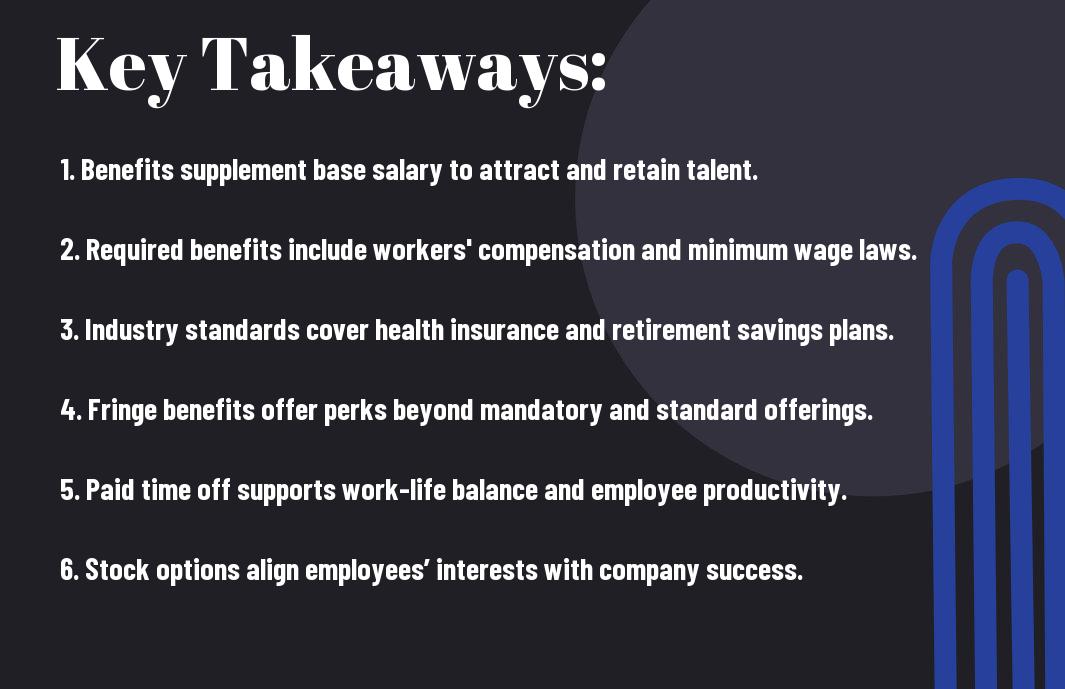
Key Takeaways:
- Employee benefits complement base salary and are necessary for attracting and retaining talent.
- There are three main types of benefits: required by law, industry standard, and fringe benefits.
- Mandatory benefits include workers’ compensation, minimum wage and overtime pay, unemployment compensation, and Social Security/Medicare contributions.
- Industry standard benefits often include health insurance, family and medical leave (FMLA), disability insurance, life insurance, retirement savings plans, paid time off (PTO), and stock options.
- Fringe benefits serve as additional perks designed to enhance employee satisfaction and company culture.
- Offering a mix of benefits suited to company size and industry helps create a positive workplace culture and improves employee loyalty.
- Regularly surveying employees about their benefits preferences can guide companies in tailoring offerings to meet workforce needs.

The Foundation of Employee Benefits
Defining Employee Benefits Beyond Salary
Employee benefits encompass much more than just the direct paycheck an individual receives. These benefits include any form of compensation or support that enhances an employee’s overall compensation package outside of their base wage or salary. Health insurance, retirement savings plans, and paid time off are some of the cornerstones of this extended compensation, offering financial security and personal well-being support that isn’t captured in hourly or annual earnings alone. When benefits are bundled thoughtfully, they create a total rewards package that speaks to both the practical and aspirational needs of your workforce.
Benefits also serve as a bridge between the employer and employee experience, reinforcing how much you value your team’s health, future, and work-life balance. For instance, flexible spending accounts allow employees to manage out-of-pocket healthcare costs with pre-tax dollars, while tuition reimbursement programs invest in their professional growth. These layers of support, often invisible in salary discussions, can lead to higher satisfaction and lower turnover rates as employees appreciate the genuine concern for their holistic welfare.
Understanding benefits in this broad sense helps you see how they function not only as financial tools but also as strategic instruments. They enhance employee engagement by addressing specific life circumstances—such as caring for family, recovering from illness, or saving for retirement—while fostering loyalty and productivity. The challenge lies in curating a benefits package that aligns with your company culture and resonates with your unique workforce demographics, ensuring that your offerings genuinely meet their needs beyond what their paycheck provides.
The Role of Benefits in Attracting Talent
In today’s competitive job market, a well-designed benefits package can be a decisive factor for candidates weighing multiple offers. Employers increasingly recognize that the headline salary figure isn’t the only element job seekers evaluate. According to a 2023 survey by Glassdoor, nearly 60% of job seekers consider benefits and perks among their top priorities before accepting a position. Health insurance remains a top priority, but emerging demands for mental health support, flexible work arrangements, and robust retirement plans are shaping employee expectations more than ever before.
Employers who successfully leverage benefits as a recruitment tool do so by differentiating themselves with unique or generous offerings tailored to their target talent pools. For example, a tech company may offer student loan repayment assistance while a creative agency might combine PTO with wellness stipends supporting mindfulness or fitness programs. These targeted benefits signal a company’s investment in employee wellbeing and career longevity, helping you stand out in industries where talent is scarce and candidates have heightened bargaining power.
Effective communication about your benefits also plays a significant role in attracting talent. Transparent, clear, and accessible information allows potential hires to fully appreciate the value of your total compensation package. Detailed benefits breakdowns during recruitment conversations, along with testimonials or case studies from current employees, can demonstrate tangible value and foster trust. This approach not only improves offer acceptance rates but also sets expectations for a supportive culture that candidates will find appealing.
Incorporating a blend of traditional and innovative benefits tailored to your workforce can strongly influence your competitive positioning. When benefits meet or exceed the evolving needs of your talent pool, you create a compelling reason for candidates to say yes—and for current employees to stay engaged and committed over the long term.
Legal Obligations: What Every Employer Must Provide
Mandatory Benefits Under Federal Law
You are required to provide several key benefits under federal law, which serve as a safety net for your employees. Workers’ compensation insurance is a prime example—this insurance ensures that employees receive medical care and partial wage replacement if they suffer work-related injuries or illnesses. Mandated by the U.S. Department of Labor, it protects both employees and employers by mitigating financial risks associated with workplace accidents. The coverage and administration can vary by state, but offering this benefit is non-negotiable for all employers in the U.S.
The Fair Labor Standards Act (FLSA) governs minimum wage and overtime compensation, which you must comply with rigorously. The federal minimum wage stands at $7.25 per hour, but many states set higher minimums, sometimes substantially above the federal baseline. Overtime pay generally kicks in after 40 hours worked per week, broken down at a rate of 1.5 times the regular hourly wage. However, exemptions apply to certain employee classifications. Keeping abreast of these distinctions is imperative to avoid costly wage and hour violations, which can lead to significant penalties and legal challenges.
Unemployment compensation contributions and Social Security/Medicare payments form the backbone of federally mandated benefits as well. Employers must pay unemployment insurance taxes to federal and state unemployment funds, which then provide benefits to eligible workers temporarily out of work. Similarly, matching Social Security and Medicare contributions help fund income support and healthcare for retired or disabled workers. These mandatory taxes must be accurately calculated and remitted, given their vital role in your employees’ financial and health security across different stages of life.
State-Specific Requirements and Variations
Laws regulating employee benefits can vary dramatically from state to state, so tailoring your benefits package to comply with local regulations is imperative. For example, states like California, New York, and New Jersey impose additional mandates on paid sick leave, family leave, and disability insurance coverage that go beyond federal requirements. California’s Paid Family Leave program, for instance, offers up to eight weeks of partial wage replacement for eligible workers—providing more generous benefits than the federal Family and Medical Leave Act (FMLA)’s unpaid provisions.
Minimum wage laws reflect another area with significant state-level variability. While the federal minimum is $7.25, some states like Washington and Massachusetts have minimum wages exceeding $15 per hour. You must also navigate unique rules around tipped employees, youth wage rates, and varying overtime thresholds. These distinctions frequently require custom payroll setups and nuanced human resources policies to remain compliant while staying competitive for local talent.
Another common state-specific nuance lies in short-term disability insurance and workers’ compensation supplemental benefits. Several states, including Hawaii, New Jersey, and Rhode Island, mandate employer-provided disability insurance that offers wage replacement for employees unable to work due to non-work-related injuries or illnesses. Understanding your state’s specific statutes can prevent under-provision of benefits and potential legal exposure driven by unexpected employee claims.
To navigate the complex landscape of state-specific requirements effectively, you should regularly consult state labor departments, legal counsel, or specialized HR resources. These variations mean one-size-fits-all benefit offerings will likely fall short or expose you to compliance risks as your business expands across jurisdictions or as legislation evolves.

Non-Negotiable Benefits That Shape Industry Standards
Every company’s benefits package reflects its values and priorities, but some elements have become baseline expectations across most industries. These non-negotiable benefits have evolved into standards, influencing competition for talent and shaping workplace culture. If your company overlooks these crucials, you risk falling behind in attracting skilled professionals who weigh benefits heavily in their job decisions. Offering these benefits not only aligns you with industry norms but also provides employees with financial security, stability, and peace of mind.
Many of these standard benefits go beyond mere legal compliance; they help establish your company as a reliable employer who invests in its workforce’s well-being and future. For example, retirement savings plans signal a commitment to long-term employee welfare, while disability and life insurance contribute to financial protection during unexpected events. These elements collectively demonstrate that you value your employees beyond their immediate job output.
Integrating industry-standard benefits also enables you to build a cohesive culture that promotes loyalty and productivity. When employees receive competitive, expected benefits, they are more likely to feel respected and motivated. This, in turn, reduces turnover and associated costs while fostering a positive reputation that can draw top-tier talent. Neglecting these benefits can lead to dissatisfaction, disengagement, and a weakened employer brand, making it harder to compete in your sector.
The Importance of Health Insurance
Health insurance stands as one of the most impactful benefits you can provide, directly influencing employee satisfaction and productivity. Despite no universal federal mandate requiring all employers to offer coverage, the Affordable Care Act enforces stringent penalties on medium and large employers who fail to provide health insurance. This regulatory framework has cemented health coverage as an expected component of a competitive benefits package, making it crucial for you to align with these standards to avoid legal repercussions and remain appealing to prospective employees.
The various types of health insurance you might offer—such as HMOs, PPOs, and high-deductible plans paired with Health Savings Accounts (HSAs)—permit flexibility in designing benefits that fit your workforce’s needs and budget. Providing comprehensive health coverage not only reduces absenteeism caused by untreated illnesses but also positions your company as a caring employer. Wellness initiatives linked to health insurance can further lower healthcare costs long-term by promoting preventative care and healthier lifestyles among your employees.
Offering health insurance also reflects positively on your organizational culture, demonstrating empathy and investment in employee well-being. Many employees assess health benefits closely when comparing job offers, especially in industries with high competition for skilled labor. By ensuring accessible and affordable health insurance options, your company can cultivate trust, improve morale, and enhance retention rates in an increasingly health-conscious workforce.
Family Leave and Its Impact on Workforce Morale
Family and Medical Leave Act (FMLA) provisions guarantee employees up to 12 weeks of unpaid, job-protected leave, addressing critical personal and family needs. While unpaid, this right to leave safeguards employee positions during life’s most challenging moments, such as childbirth, adoption, or serious health events. Offering paid family leave options, even beyond legal requirements, significantly elevates workforce morale and loyalty, as employees experience genuine support during pivotal life events.
Companies that extend paid family leave often witness improved employee retention, reduced turnover costs, and enhanced employer reputation. According to studies, employees who receive paid parental leave demonstrate higher engagement and a stronger commitment to their organizations. For working parents, the ability to balance family responsibilities without sacrificing income or employment security creates added motivation and reduces stress, fostering a healthier work environment.
Incorporating flexible policies around family leave also attracts diverse talent pools and helps build inclusive workplaces. With evolving family structures and caregiving roles, meeting these benefit expectations reflects sensitivity to the modern workforce. Additionally, providing these benefits can position your company as forward-thinking and employee-centric, qualities that carry weight in recruitment and public perception.
Expanding on family leave by offering resources such as return-to-work programs, flexible schedules post-leave, or caregiver support networks can further amplify its positive impact on morale. These supplementary measures foster a sense of community and stability, helping employees transition smoothly back into their roles and maintain productivity without feeling pressured or overwhelmed.
Innovative Perks: Moving Beyond the Basics
Leveraging innovative perks can distinguish your company in a competitive talent landscape. Many forward-thinking organizations now go beyond traditional offerings like health insurance and PTO, incorporating inventive benefits that resonate deeply with employees’ evolving needs and lifestyles. For example, some companies have introduced on-site wellness centers or partnerships with local gyms, offering subsidized memberships to encourage healthy living. Others have rolled out mental health benefits that include access to virtual therapy, mindfulness apps, and stress management workshops. These initiatives not only boost employee satisfaction but also contribute to measurable increases in productivity and reductions in absenteeism.
Another avenue involves financial wellness programs tailored to provide guidance on budgeting, debt management, and retirement planning. With financial insecurity affecting a large portion of the workforce, such benefits address a significant source of stress for employees. Offering personalized coaching sessions or interactive online platforms enables your staff to gain confidence in managing their personal finances. Some employers also provide student loan repayment assistance, a perk especially attractive to younger employees navigating significant debt burdens.
Platforms that foster continuous learning and skill development can serve as powerful retention tools. Beyond tuition reimbursement, companies are adopting subscription models for online courses, access to industry conferences, and dedicated time during the workweek for professional growth. Encouraging innovation through hackathons, idea incubators, or cross-functional projects further drives engagement and nurtures a culture of growth. These perks not only enrich employees’ careers but align their development with your organization’s long-term success.
Creative Employee Well-being Initiatives
Well-being initiatives have evolved to encompass far more than physical health, recognizing mental, emotional, and social dimensions. Creative approaches include immersive experiences such as wellness retreats, art therapy sessions, or guided nature walks facilitated through employer support. Leading companies are customizing well-being offerings to reflect their unique workforce demographics, incorporating everything from yoga classes and nutrition coaching to financial planning workshops and resilience training. Such diversity ensures that your benefits resonate with employees on multiple levels.
Several innovative employers have integrated technology into well-being programs to maximize participation and impact. Mobile apps that track exercise, sleep, and mood provide real-time feedback and incentivize positive behaviors through gamification. Virtual reality sessions aimed at relaxation or stress reduction are becoming options for employees working in high-pressure environments. You can also foster connection through social challenges, like team step-count competitions or wellness-focused group challenges, which promote camaraderie while encouraging healthy habits.
Tailoring well-being support to address specific pain points in your organization can create meaningful improvements in employee morale. For example, companies that implement flexible mental health days or “pause” hours recognize burnout and provide time to recharge without penalties. Programs that include confidential counseling services or dedicated spaces for decompression signal to employees that their holistic health is a priority. By embracing these creative well-being initiatives, you create an environment where individuals feel valued and empowered to bring their best selves to work.
The Growing Trend of Flexible Work Arrangements
The shift toward flexible work arrangements is more than a response to recent global events—it has become an expected component of a modern benefits package. Offering options such as remote work, flexible start and end times, compressed workweeks, or job-sharing arrangements creates a sense of autonomy that many employees highly value. Evidence shows that companies embracing flexibility often see higher retention rates; a 2023 Gallup study found that 54% of employees would leave their current job for one that offers more flexible work options. Flexible work arrangements also expand your talent pool geographically, enabling you to attract skilled candidates who might otherwise be excluded by location constraints.
Implementing flexibility requires thoughtful planning to maintain productivity and collaboration. Providing employees with the tools and technology necessary to work effectively from anywhere is vital. Establishing clear expectations around communication and deliverables helps prevent misunderstandings and ensures alignment across teams. Additionally, flexibility can be tailored differently across departments or roles to account for operational needs without compromising employee satisfaction. Transparency and ongoing evaluation of these arrangements foster trust and adaptability within your workforce.
Companies that successfully integrate flexible work typically complement these arrangements with supportive policies, such as stipends for home office equipment or mental health resources focused on remote workers’ challenges. Regular check-ins by managers and virtual social opportunities can help overcome the isolation some employees feel when working remotely. By showcasing your commitment to work-life balance through flexible schedules, you appeal to a broad spectrum of workers from seasoned professionals seeking better balance to younger generations prioritizing lifestyle compatibility.
Adopting flexible work arrangements is a multifaceted strategy that requires balancing employee preferences with organizational goals. By investing in digital infrastructure, providing managerial training for remote leadership, and fostering a culture that values output over hours logged, you position your company to thrive in the evolving world of work.
Retention and Loyalty: Benefits That Foster Employee Commitment
Employee commitment often hinges on more than just salary; benefits play a significant role in fostering loyalty and long-term retention. When you offer a comprehensive benefits package that demonstrates investment in your team’s future, employees feel valued beyond their day-to-day tasks. Benefits that target long-term security and personal growth create a sense of stability and belonging, which directly impacts turnover rates and employee satisfaction. The simple fact that retirement plans, professional development opportunities, and flexible benefits are part of your offerings can be a deciding factor for employees who might otherwise consider competing offers.
Retention also improves when employees see their employer actively supporting their continued success, both professionally and personally. For example, benefits such as paid time off, health insurance, and disability protection alleviate external stresses, allowing employees to focus more fully on their roles. More importantly, benefits that recognize employees’ aspirations beyond basic needs—such as tuition reimbursement or stock options—communicate your company’s commitment to their future. This alignment between company offerings and employee goals establishes a partnership mentality, where employees are more likely to be engaged, productive, and loyal over time.
Offering benefits with a clear path to long-term financial and professional security can also elevate your employer brand. In competitive industries, candidates often research potential employers’ benefits before applying. When your benefits consistently exceed typical packages, particularly in retirement and growth opportunities, you position your organization as a desirable place to build a career. This perception not only attracts high-caliber talent but encourages existing employees to stay, reducing recruitment costs and strengthening overall organizational knowledge and culture.
Retirement Planning Options and Their Long-Term Benefits
Retirement savings plans remain one of the most compelling benefits you can offer to foster employee loyalty. Options such as 401(k)s often come with employer matching contributions, which effectively boost an employee’s take-home pay by supplementing their savings. This match acts as a powerful incentive to participate in the plan and stay with the company longer, as employees want to maximize these financial advantages before moving on. Additionally, by providing access to professionally managed retirement accounts, you reduce the burden on employees to navigate complex investment decisions on their own.
Beyond immediate financial perks, retirement planning benefits send a message that you care about employees’ futures well after their working years. Employees know that not every employer offers such structured support for retirement preparedness, especially small to mid-sized companies that may have budget constraints. Delivering these benefits creates a psychological contract wherein employees feel their well-being is prioritized holistically. Over time, this can translate into higher retention rates, as workers are less likely to switch jobs when they have significant retirement savings earmarked specifically with your company’s plan.
Offering different types of retirement accounts, such as IRAs alongside traditional 401(k)s, widens participation by tailoring options to diverse employee needs and preferences. For example, some employees may prefer Roth IRAs for the tax advantages they provide during retirement, while others may benefit from the traditional tax deferral of 401(k) contributions. These flexible offerings not only enhance employee choice but demonstrate responsiveness to the evolving financial landscapes your workforce faces. Investing in retirement plans is, therefore, an investment in firm stability and employee peace of mind.
The Value of Professional Development Reimbursements
Professional development reimbursements empower your employees to acquire new skills, certifications, or higher education without the financial barriers that might otherwise limit their growth. These benefits have ripple effects on your business because they enable a more knowledgeable and adaptable workforce. Employees poised to take on advanced roles or handle emerging technologies create direct value in productivity and innovation. Moreover, access to tuition reimbursement or similar programs can transform your workplace into a learning organization where continuous improvement is a shared goal.
Offering reimbursements for courses and training fosters a culture where growth is normalized and encouraged. Employees who feel supported in their ambitions often demonstrate increased engagement, higher motivation, and greater loyalty. For example, companies in the tech sector frequently utilize professional development benefits to remain competitive as skill requirements evolve rapidly. Covering expenses for training certifications or workshops has become a retention tool as much as a recruitment advantage, with a marked reduction in early turnover among employees utilizing these benefits.
Another advantage lies in how professional development benefits can be tailored to align with both employee and company goals. You can structure reimbursement programs to encourage skill acquisition directly relevant to your business needs—whether in leadership, software proficiency, or industry-specific regulations. This ensures a win-win scenario where personal employee growth also enhances your internal capabilities, bolstering performance and strategic agility over the long term.
Extending professional development reimbursements as part of your broader retention strategy signals that you view your employees as assets worth investing in beyond their current roles, strengthening mutual loyalty and commitment.
Summing up
Ultimately, understanding the different types of employee benefits your company should offer enables you to build a more attractive and competitive workplace. By providing a mix of legally required benefits, industry-standard options, and fringe perks, you create a comprehensive package that meets both the basic needs and the unique preferences of your workforce. Offering required benefits like workers’ compensation, social security contributions, and unemployment insurance ensures your compliance with federal and state laws, protecting your business while supporting your employees during challenging times.
Your approach to benefits should also consider the industry standards that many businesses have adopted to remain competitive, such as health insurance, retirement savings plans, and paid time off. These types of benefits not only assist employees in managing their health, financial futures, and work-life balance but also demonstrate your commitment to their well-being. Implementing such benefits thoughtfully can improve morale, reduce turnover, and increase productivity, giving your company a stronger foundation for long-term success.
In addition to required and standard benefits, you have the opportunity to differentiate your company by offering fringe benefits that enhance your workplace culture and show employees you value their overall satisfaction. Whether that means wellness programs, educational reimbursements, or unique perks aligned with your industry, these benefits contribute to a positive work environment and help attract talent that aligns with your company’s values. By strategically designing your benefits package, you will foster loyalty and engagement, ultimately supporting both your employees’ needs and your business goals.
FAQ
Q: What are the main categories of employee benefits?
A: Employee benefits typically fall into three main categories: benefits required by law, industry standard benefits, and fringe benefits. Required benefits include things like workers’ compensation and social security contributions. Industry standard benefits often include health insurance and retirement plans, while fringe benefits are additional perks like stock options or wellness programs.
Q: Are employers legally required to offer health insurance?
A: While there is no universal federal law requiring all employers to provide health insurance, under the Affordable Care Act, medium and large-sized employers must offer health insurance or face penalties. Smaller employers may choose to offer health insurance to attract and retain talent, but they are not mandated by federal law.
Q: What is the difference between workers’ compensation and disability insurance?
A: Workers’ compensation insurance covers employees who get injured or become sick due to their job, providing medical benefits and supplemental income. Disability insurance, on the other hand, offers financial protection for illnesses or injuries that are not work-related, helping employees maintain financial stability if they cannot work.
Q: How does paid time off (PTO) benefit employees?
A: Paid time off allows employees to take time away from work while still receiving pay. This benefit supports a healthy work-life balance, reduces stress, and helps employees feel more refreshed and motivated, which can lead to increased productivity and job satisfaction.
Q: What types of retirement savings plans are commonly offered by employers?
A: The most common employer-sponsored retirement savings plans are 401(k) plans, which often include employer contributions and tax advantages, and Individual Retirement Accounts (IRAs), which are funded by employees but may also receive employer contributions. These plans help employees save money for their future in a tax-efficient manner.
Q: How can offering stock options benefit both employees and companies?
A: Stock options give employees an ownership interest in their company, which can increase their motivation and loyalty. For companies, this benefit helps retain valuable employees by aligning their success with the company’s performance, encouraging long-term commitment and productivity.
Q: What types of benefits are considered “fringe benefits” and how do they contribute to company culture?
A: Fringe benefits include additional perks such as wellness programs, professional development stipends, free lessons (e.g., acting or singing in the entertainment industry), and other unique offerings that go beyond standard benefits. These perks can help shape a positive company culture, making the workplace more attractive and engaging for employees.
Leave a Comment