

Employee Benefits That Drive Engagement and ROI
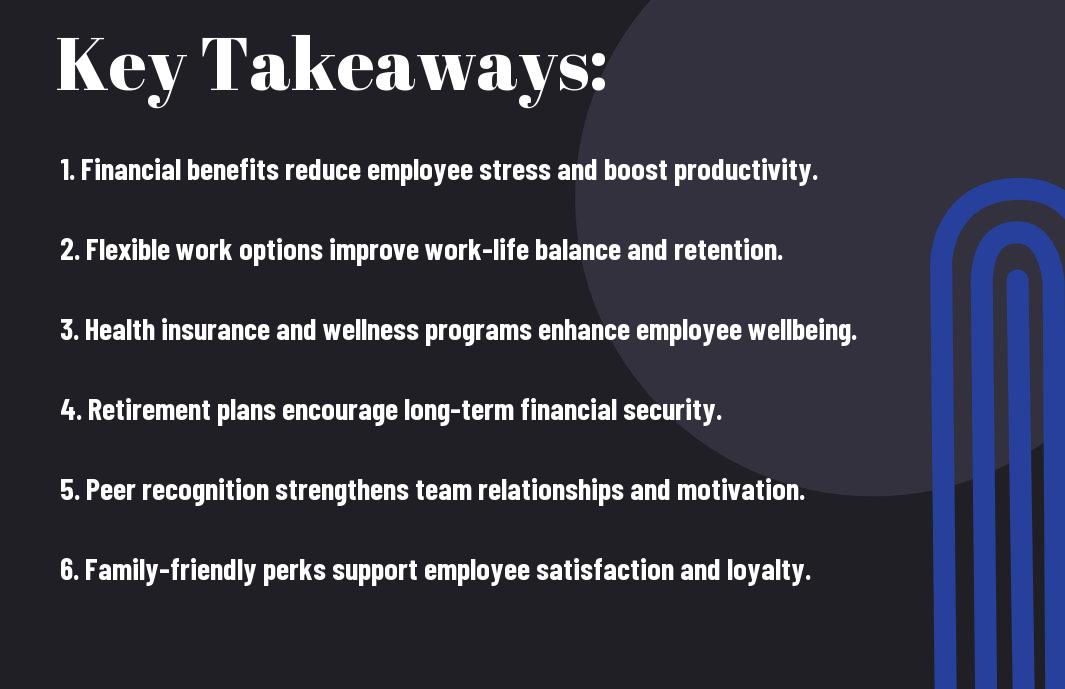
It’s important for you as a business leader to choose employee benefits that not only attract talent but also boost engagement and deliver measurable returns. By offering the right mix of financial security, wellness support, and lifestyle perks, you can foster a motivated workforce while maximizing your investment. Understanding which benefits resonate with your team allows you to allocate resources effectively and create a workplace culture that drives productivity and loyalty.

Maximizing Employee Wellbeing Through Financial Security
Providing financial security goes beyond simply paying employees on time. Addressing the persistent money stress many workers face can have a direct impact on productivity and retention. Nearly seven in ten employees regularly worry about finances, which can distract from their work and drain emotional energy. Tackling this by offering benefits focused on financial resilience—like emergency savings options, student loan assistance, or accessible retirement plans—signals that you’re invested in your team’s long-term stability and peace of mind.
Empowering employees with benefits tailored to their financial realities also helps level the playing field against larger competitors offering flashy perks. When you align benefits with practical financial needs, your workforce feels supported in both everyday expenses and major life events. This kind of support can reduce turnover and foster loyalty, especially with millennial and Gen Z workers who face distinctive challenges such as student debt and housing affordability.
Innovative Paycheck Management Solutions
Access to wages between paydays has emerged as a valuable tool to ease financial pressure. Pay-on-demand services integrated with payroll enable employees to tap into a portion of their earned income before their scheduled payday, preventing reliance on costly overdraft fees or predatory loans. For example, offering a financial wellness app like Gusto Wallet™ lets employees manage their paychecks in real time, smoothing out cash flow issues without burdening your HR team.
Such solutions not only help with immediate cash needs but also encourage better budgeting habits over time. Employees who can avoid short-term financial crises are more likely to focus on their work tasks. From your perspective as an employer, reducing financial distractions translates to fewer missed days and higher productivity, making these payroll innovations a win-win investment.
The Rising Importance of Health Insurance
Healthcare costs continue to weigh heavily on American households, with 79 million struggling to afford coverage or paying off medical debt. Offering a health insurance plan tailored to your team’s specific needs can significantly ease this burden. Many affordable options now include comprehensive medical, dental, and vision coverage, making it more feasible than ever to provide meaningful health benefits without breaking your budget.
Beyond direct medical savings, health insurance benefits contribute to workforce stability and engagement by reducing stress related to unexpected health expenses. Employees who know they’re covered tend to take fewer sick days and approach their roles with greater confidence. When balanced with flexible health accounts like HSAs or FSAs, the overall benefits package empowers employees to take more control of their healthcare spending.
Particularly for small businesses, selecting the right health insurance involves assessing your team’s demographics and health needs to find plans that offer the best value and coverage. Partnering with a provider that offers scalable options and clear communication can simplify administration, ensuring that your employees fully understand and appreciate their benefits. The return on investment manifests not only in happier employees but also in reduced turnover and lower long-term costs associated with untreated health issues.

Protecting Your Workforce with Essential Coverage
Workers’ compensation and healthcare spending accounts are foundational benefits that safeguard your employees and shield your business from costly setbacks. When accidents happen or medical expenses arise, these coverages provide practical solutions that keep your team secure and financially stable. Integrating them thoughtfully into your benefits package demonstrates a commitment to your employees’ wellbeing and strengthens your company’s resilience.
Choosing the right coverage also affects your business’s bottom line. Insurance premiums and benefit administration can be balanced with risk mitigation and tax advantages. By investing in imperative protections, you reduce the chances of litigation, costly claims, and unexpected expenses while enhancing employee loyalty through tangible security.
The Case for Workers’ Compensation Insurance
Even if your state doesn’t mandate workers’ comp, offering it signals proactive care for your workforce. It generally covers wage replacement, medical bills, and rehabilitation services when employees get injured on the job. In industries with higher physical risk, workers’ compensation averages about 1.4 percent of an employee’s salary, making it a relatively affordable safeguard against potentially ruinous financial consequences resulting from workplace accidents.
Having workers’ compensation also protects you legally. Without it, injured employees might pursue lawsuits that could drain your resources and damage your reputation. Providing this insurance not only supports injured workers’ recovery but also fosters a safer workplace culture where everyone feels valued and protected.
Understanding HSAs and FSAs for Healthcare Expenses
Health savings accounts (HSAs) and flexible spending accounts (FSAs) offer powerful options to help your employees manage out-of-pocket medical costs tax-free. HSAs, controlled by employees, let them save and invest funds year over year, typically paired with high-deductible health plans. FSAs, employer-established, allow employees to allocate pre-tax dollars to medical expenses within a plan year. Offering FSAs can reduce your payroll tax burden since employee contributions come from pre-tax earnings.
Both accounts enable employees to tackle expenses like prescription medications, co-pays, or even vision and dental care that standard insurance might not fully cover. By providing access to these accounts, you empower your workforce to take charge of their healthcare finances with added tax benefits, easing financial stress related to medical spending.
Since HSAs are employee-owned, funds roll over annually and can be invested, growing over time for future healthcare or retirement needs. FSAs have a “use-it-or-lose-it” rule, but some plans allow limited rollover or grace periods. Understanding these nuances helps you tailor benefits that fit your team’s financial and healthcare priorities without complicating your administration.
Empowering Employees with Retirement and Security Tools
Offering your team solid retirement options and security benefits not only supports their long-term wellbeing but also enhances your company’s reputation as a thoughtful employer. Benefits like 401(k) plans and identity theft protection tackle two pervasive concerns—financial future and personal data safety—that weigh heavily on many employees’ minds today. You can elevate overall engagement by embedding these practical, forward-thinking solutions into your benefits package, which also signals that you value your employees beyond their day-to-day productivity.
Incorporating these tools can be surprisingly cost-effective and straightforward. Leveraging payroll integration for retirement contributions streamlines management, while partnerships with identity protection services provide an unexpected layer of employee care. These investments often translate to better retention, a sharper talent pipeline, and a workplace culture centered on trust and security.
The Impact of 401(k) Plans on Future Financial Stability
401(k) plans serve as a foundational pillar for your employees’ retirement readiness, especially given that nearly half of Americans fall short of saving enough for retirement. Automatic payroll deductions make participation both effortless and consistent, increasing the likelihood that your team will build meaningful nest eggs over time. Offering a 401(k) with employer matching contributions can further boost savings and motivate employees to stay engaged with their future financial goals.
Tax advantages accompany 401(k) offerings, benefiting both employers and employees. Contributions reduce taxable income, while employers can claim tax credits that help offset administrative costs. By framing this benefit as a partnership in securing your employees’ financial futures, you strengthen loyalty and demonstrate a responsible leadership approach that acknowledges the realities of today’s workforce demographics.
Identity Theft Protection: A Modern Necessity
In a digital landscape rife with data breaches, identity theft is no longer a rare threat but an everyday risk—impacting a significant portion of American workers annually. By covering or subsidizing identity theft protection as a voluntary benefit, you help shield employees from the stress and hours lost to resolving fraudulent activity. This preventative care reduces downtime and promotes peace of mind, which can contribute directly to improved workplace focus and productivity.
Employers who offer identity protection signal a commitment to holistic employee welfare that extends beyond traditional health and financial benefits. With 36 percent of companies already incorporating credit monitoring services, joining this group places you ahead in providing cutting-edge employee security. This benefit can also differentiate your business in competitive talent markets where cybersecurity concerns are rising.
Adding identity theft protection programs frequently involves partnerships with providers offering comprehensive monitoring, alerts, and recovery assistance—services designed to detect unauthorized use early and streamline remediation. Employees appreciate having experts ready to handle complex issues, which reduces anxiety and demonstrates that you take their personal security as seriously as their professional contributions.
Crafting Flexible Work Environments to Enhance Job Satisfaction
Flexible work arrangements can transform your workplace culture and drastically reduce turnover. Allowing employees to choose when and where they work taps into their natural rhythms and personal needs, increasing engagement and overall productivity. Studies have shown that remote or flexible employees often report higher satisfaction levels, with some surveys indicating a 20-25% increase in reported productivity compared to traditional office settings. This flexibility not only helps retain top talent but also improves your company’s ability to attract candidates in a competitive market.
Even if your business requires a physical presence, small adjustments like shift-swapping tools or staggered start times can ease scheduling conflicts and create a more accommodating environment. Giving your team autonomy over their schedules signals trust and respect, often leading to greater accountability and a stronger connection to their work. By focusing on outcome-based performance rather than clock-punching, you can foster a more motivated and resilient workforce ready to meet your company’s goals.
Creating Work Schedule Flexibility
Designing flexible work schedules means more than just approving occasional remote days—it’s about embedding flexibility into your company’s DNA. You might consider compressed workweeks, where employees work longer days but fewer total days, or implement core hours that require presence only during critical periods, with freedom outside those windows. These approaches provide employees with better control over their daily lives, enabling them to manage responsibilities like childcare, schooling, or medical appointments without sacrificing work performance.
Implementing technology like shared calendars and shift-swapping apps can simplify the logistics and reduce managerial overhead. For instance, companies that allow shift swaps via mobile apps report fewer absenteeism issues and improved employee morale. By clearly communicating expectations and establishing trust, you empower your staff to balance workloads effectively while meeting business needs. Over time, these flexible schedules can contribute to significant gains in engagement and reduced burnout, lowering recruitment costs associated with turnover.
Family-Friendly Benefits: Catering to Caregivers
Supporting employees who juggle caregiving responsibilities sends a powerful message that you value their whole lives, not just their work hours. Offering benefits like extended parental leave, subsidized childcare, or backup care services can ease the burden for working parents and those caring for elderly relatives. In fact, companies with family-friendly policies see up to a 50% reduction in turnover among caregivers, which directly impacts your bottom line by retaining experienced workers.
Flexible benefits might also include access to parenting resources, counseling, or eldercare planning assistance, showing employees that you recognize all dimensions of their lives. These supports help reduce absenteeism and presenteeism caused by family-related stress. When your team feels supported in their caregiving roles, they’re more likely to bring full focus and energy to their job, strengthening your workforce’s overall resilience.
Expanding family-friendly benefits to cover diverse family situations, including partnerships, single parents, and multi-generational households, ensures no one feels excluded. This inclusivity not only broadens your appeal as an employer but also promotes a culture of empathy and belonging, which studies link to higher employee engagement scores and improved workplace collaboration.

Building a Culture of Engagement Through Activities and Recognition
Integrating thoughtful activities and recognition into your benefits strategy can profoundly influence how connected your employees feel to your company. When people engage beyond their daily tasks—through shared experiences and public acknowledgment—they develop stronger bonds with colleagues and a deeper commitment to your organization’s goals. This kind of culture not only drives retention but also sparks higher productivity, translating benefits directly into your bottom line.
Looking beyond conventional perks, focus on creating consistent opportunities for interaction and appreciation. Celebrations, volunteer efforts, and peer-driven recognition programs transform your workplace into a dynamic environment where motivation thrives. These initiatives send a powerful message: your people matter both as professionals and as individuals, which fuels a cycle of engagement and performance.
The Value of Volunteer Time and Seasonal Events
Offering paid time off specifically for volunteering taps into employees’ desire to make an impact beyond work while reinforcing your company’s social responsibility. Nearly one-quarter of companies provide this benefit, and the payoff is clear—employees who volunteer through work report higher job satisfaction and stronger team cohesion. Additionally, embedding volunteer time as part of your culture enhances your brand reputation and fosters community goodwill.
Seasonal activities serve as simple yet effective anchors for workplace engagement during slower periods. From summer picnics to winter holiday celebrations, these events break monotony and build anticipation. Repeating successful annual traditions ensures that your team has something to look forward to, boosting morale over time with limited investment. The goal is creating fun, inclusive touchpoints that energize employees year-round.
Fostering Peer Recognition to Boost Morale
Encouraging employees to recognize one another creates an authentic culture of appreciation, often more meaningful than manager-only praise. Peer recognition programs have proven to increase feelings of value and belonging, which correlates with a 36 percent improvement in employee engagement scores according to multiple studies. These initiatives can be as simple as digital shout-outs or structured platforms where colleagues nominate each other for awards, amplifying a sense of teamwork.
Beyond motivation, peer recognition helps surface talents and achievements that might otherwise go unnoticed. By empowering your team to highlight each other’s contributions, you create a more transparent and supportive environment where collaboration flourishes. This approach also reduces the burden on managers to be the sole source of feedback, making recognition a continuous and shared responsibility.
Adding layers like spot bonuses or small rewards tied to peer nominations can further enhance participation, ensuring these programs evolve from nice extras into integral components of your workplace culture. When recognition feels genuine and readily available, employees tend to match that positivity with higher discretionary effort and loyalty.
Conclusion
From above, you can see that offering employee benefits that truly resonate with your team not only supports their financial and personal well-being but also drives engagement and delivers a strong return on investment. By focusing on benefits that address real needs—such as financial tools, health coverage, flexible work options, and opportunities for growth—you create a workplace environment where employees feel valued and motivated. This foundation strengthens loyalty, reduces turnover, and enhances overall productivity.
As a small business owner, tailoring your benefits package to fit both your budget and your employees’ priorities allows you to compete effectively with larger companies. Thoughtfully selected benefits contribute to a positive company culture and demonstrate that you invest in your people. When your team feels supported, they are more likely to be committed, engaged, and ready to contribute to your business’s long-term success.
Leave a Comment